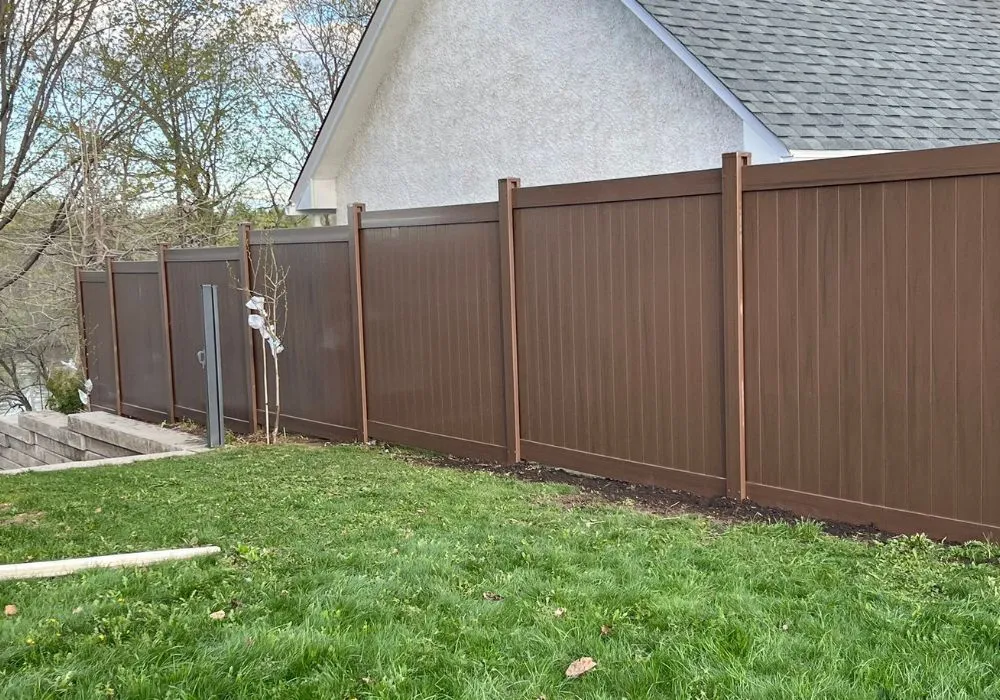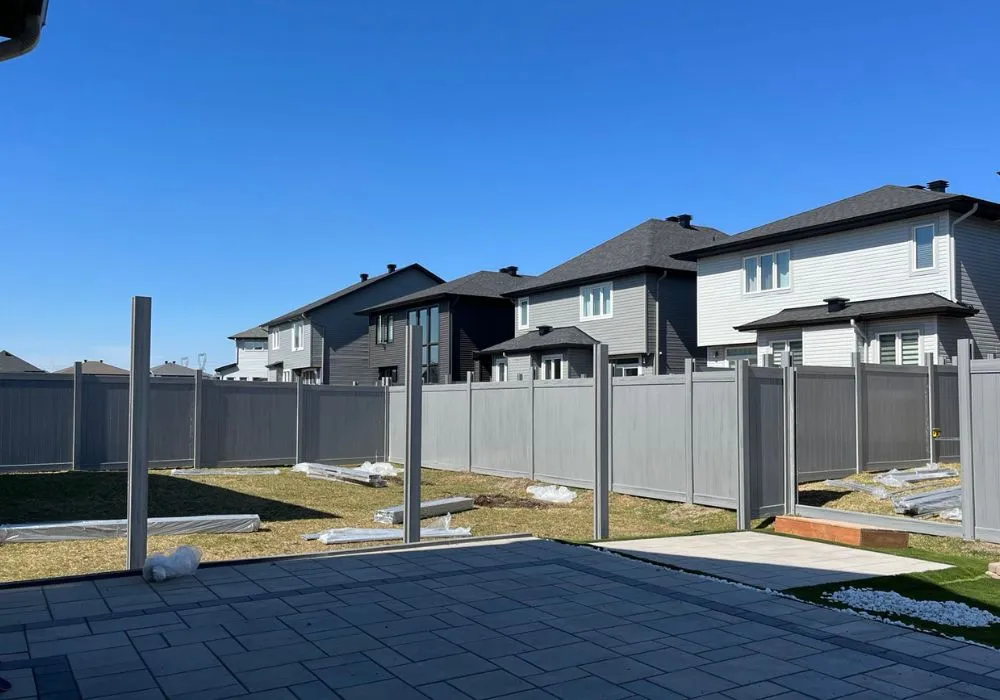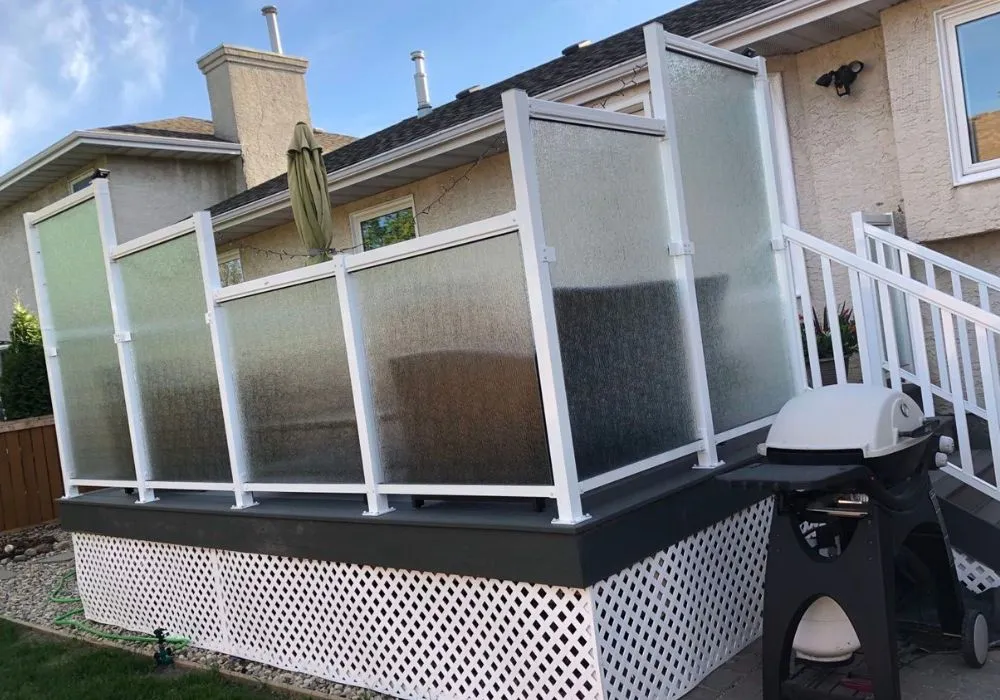

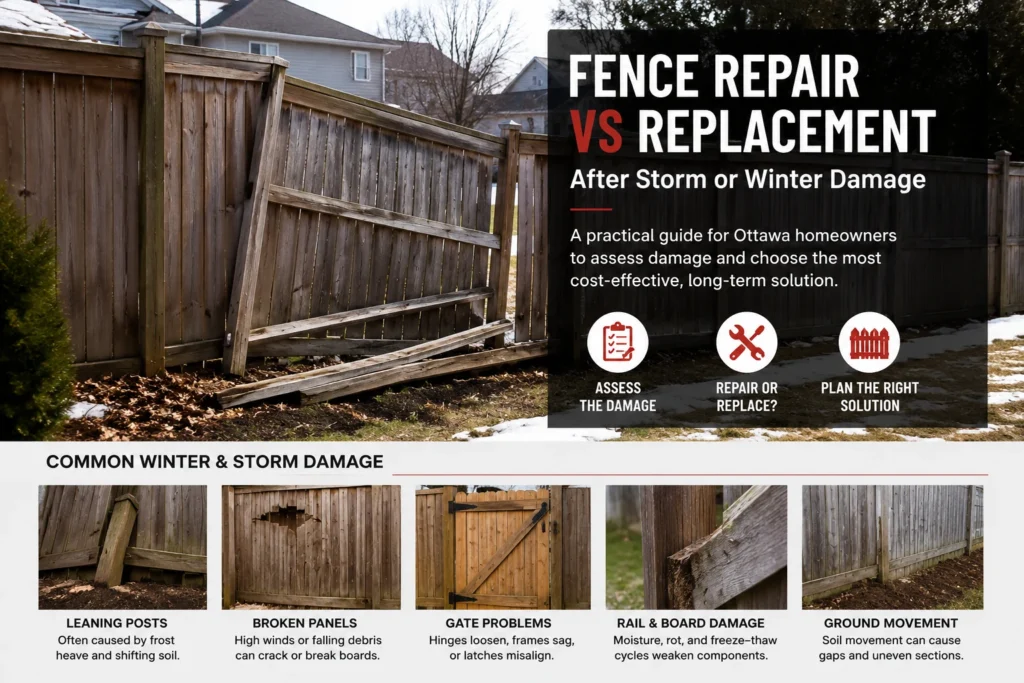
A leaning post, cracked panel or dragging gate does not automatically mean the entire fence needs to be replaced. It also should not be dismissed as a minor cosmetic issue until the supporting posts and connections have been inspected.
After an Ottawa winter or major windstorm, the right decision depends on where the damage occurred, how much of the fence is affected, whether the underlying posts remain stable and whether matching replacement components are still available.
This guide explains how to distinguish an isolated repair from a partial or complete replacement—and what homeowners should do before removing damaged materials.
Quick answer: Should you repair or replace a damaged fence?
Repair is usually worth considering when the damage is isolated, the surrounding posts remain stable, compatible components are available and the problem has a clear one-time cause.
Replacement becomes more practical when several structural posts have failed, the entire run has lost alignment, damage keeps returning after winter, materials have widespread deterioration or compatible replacement parts are no longer available.
A third option is often overlooked: partial replacement. One damaged run, gate assembly or group of posts may be replaced while structurally sound sections remain.
The decision should be based on the complete fence system—not only the most visible broken panel.
First, make the area safe
Do not begin by pulling, cutting or straightening the damaged fence.
Storm damage can involve electrical lines, unstable trees, broken glass, sharp metal, exposed fasteners and fence sections being held under tension.
Stay away from any downed electrical line
If a power line is on or near the fence, assume the line is energized.
Hydro Ottawa instructs residents to call 9-1-1, notify Hydro Ottawa and stay at least 10 metres away from the line and anything it touches—including fences, trees, vehicles and water. Electricity can travel through connected materials and wet ground.
Do not:
- Touch the fence.
- Open a connected metal gate.
- Move a branch touching the line.
- Walk through nearby water.
- Attempt temporary repairs.
- Allow pets or neighbours into the area.
Keep clear of unstable trees and branches
A branch resting on a fence may shift when the panel, rail or post is moved. Suspended limbs and split trees should be assessed by an appropriate tree professional.
For hazardous tree or limb conditions affecting a roadway or public area, the City of Ottawa directs residents to call 3-1-1. The City also advises taking photographs before removing a dead or hazardous private tree where an immediate safety exemption applies.
Secure pets and control access
A damaged fence may no longer contain a dog or prevent access to a backyard.
Use a safe temporary barrier where appropriate, but do not attach it to unstable posts. A temporary barrier is not a substitute for restoring a pool enclosure to a compliant condition.
Treat pool-enclosure damage as urgent
When the damaged fence forms part of a pool enclosure, restrict access to the pool immediately.
Ottawa requires pool enclosures to be maintained. A complete replacement enclosure must comply with current requirements and requires a permit. The City states that limited repair or replacement of parts does not necessarily require the entire older enclosure to be upgraded, other than the current gate-locking requirement, but the specific work should be confirmed with the City.
Document the damage before moving anything
Photographs and measurements help a contractor, manufacturer, insurer or warranty administrator understand what happened.
When it is safe, record:
- A wide view of the complete fence line.
- Both sides of the damaged area.
- Every visibly affected post.
- The height and direction of any leaning.
- Cracks, bends, separation or broken connections.
- The ground around each post.
- Raised or exposed concrete.
- Standing water, erosion or snow pressure.
- Fallen trees, branches or impact points.
- Gate position and latch alignment.
- Manufacturer labels or identifiable profiles.
- The date the damage was first noticed.
- Relevant storm timing or winter conditions.
Do not photograph only the broken board. A wide image may show that the visible damage is part of a larger alignment problem.
The Insurance Bureau of Canada recommends documenting damage with photos, notes, proof of purchase and warranty information, retaining damaged items unless they are dangerous, and keeping cleanup receipts.
Determine whether the damage was sudden or gradual
The cause affects both the repair strategy and possible insurance or warranty questions.
Sudden storm or impact damage
Common signs include:
- A tree or branch lying on the fence.
- Several panels leaning in the same direction.
- A snapped rail or post.
- A distinct impact point.
- Bent metal.
- A cracked vinyl panel with otherwise aligned posts.
- Damage appearing immediately after a known storm.
- Vehicle, snowplow or equipment impact.
Sudden damage may be relatively localized even when it looks dramatic.
For example, a fallen branch may destroy two panels while leaving the posts on either side structurally sound. Conversely, a strong wind event may loosen or rotate several posts without visibly breaking the panels.
Gradual winter or ground-movement damage
Common signs include:
- One post sitting higher than adjacent posts.
- A fence line becoming progressively uneven.
- A gate that worked in autumn but drags in spring.
- Concrete rising above the surrounding grade.
- Repeated movement in the same location.
- Soil gaps around one side of a footing.
- Several connected panels twisting without a clear impact point.
- Problems becoming more visible during spring thaw.
These patterns can be related to frost action, drainage, soil movement or an inadequate footing. Repairing only a rail or latch will not solve a moving post.
Age and deterioration
Gradual deterioration may include:
- Wood decay near ground level.
- Rust through a metal post or rail.
- Cracked or weakened connections.
- Brittle, damaged or distorted components.
- Loose fasteners throughout the fence.
- Multiple previous repairs.
- Panels that no longer remain securely connected.
- Widespread surface failure.
A fence can suffer sudden storm damage and still have significant pre-existing deterioration. The assessment should separate new damage from older conditions.
Start the assessment with the posts
Posts determine whether the rest of the fence can be reused.
A damaged panel attached to stable posts is usually a different project from an undamaged panel attached to failing posts.
Signs a post may be repairable or replaceable individually
An isolated post repair or replacement may be possible when:
- Only one post has moved or broken.
- Adjacent posts remain vertical and stable.
- The connected rails or panels can be detached without major damage.
- The footing failure is localized.
- Matching post and connection components are available.
- The remaining fence line is structurally sound.
- Drainage or impact conditions can be corrected.
Replacing one post can preserve a much larger section of fence, but it may require temporary removal of the adjoining panels.
Signs the post problem is more widespread
Partial or complete replacement deserves consideration when:
- Several posts move when pushed.
- Multiple posts have lifted or rotated.
- The top line rises and falls across the entire run.
- Gate, corner and line posts are all affected.
- Concrete footings have cracked or shifted in several locations.
- Posts are extensively corroded or decayed at grade.
- Previous post repairs have failed again.
- Drainage repeatedly saturates the same fence line.
- The fence was installed with inconsistent post spacing or footing details.
When several posts have failed, preserving the panels may not provide meaningful long-term value if the entire support system must be reconstructed.
Check panels, rails and infill separately
Panels are often more repairable than posts.
A localized panel repair may make sense when:
- One panel was hit by a branch or equipment.
- The posts on both sides remain stable.
- Rails are securely connected.
- Matching boards or panel profiles are available.
- Damage has not spread to adjoining sections.
- The new component can be installed according to the original system.
Replacement may be more practical when:
- Numerous panels are cracked, twisted or detached.
- Rails have pulled out across several sections.
- The panel design has been discontinued.
- Older material cannot be matched reasonably.
- The fence has widespread rot or corrosion.
- Repairs would create visibly inconsistent sections.
- The posts and panels are both approaching the end of their useful condition.
- The original system was assembled in a way that prevents isolated component replacement.
Do not assume a complete prefabricated panel must always be replaced. Some systems permit individual boards, rails or infill pieces to be changed. Others require disassembly of the full section.
A dragging gate is often a symptom—not the main failure
Gate problems are frequently blamed on hinges or latches, but the supporting posts may have moved.
Inspect whether:
- The hinge post is vertical.
- The latch post is vertical.
- The gate frame remains square.
- The opening is still the correct width.
- Hinges are loose or bent.
- The latch is simply out of adjustment.
- The bottom of the gate has dropped.
- Snow, soil or paving now obstructs the swing.
- The gate post footing has lifted or rotated.
A hardware adjustment may be enough when:
- Both posts remain stable.
- The frame is square.
- The gate has not bent.
- The problem is limited to a loose hinge, latch or fastener.
- The gate returns to alignment after adjustment.
Gate replacement or structural work may be needed when:
- The frame is permanently twisted.
- Internal reinforcement has failed.
- The hinge post moves under the gate’s weight.
- The latch post has shifted.
- The opening is no longer square.
- A wide double gate has lost structural support.
- The same gate requires repeated adjustment.
Replacing hardware on a moving post usually creates only a temporary improvement.
Repair, partial replacement or complete replacement?
The decision is better understood as three options.
| Condition | Isolated repair | Partial replacement | Complete replacement |
|---|---|---|---|
| One broken board, picket or infill piece | Strong candidate | Unlikely | Unlikely |
| One damaged panel between stable posts | Strong candidate | Possible | Usually unnecessary |
| One failed post with sound adjacent sections | Possible | Strong candidate | Usually unnecessary |
| Several failed posts in one run | Weak candidate | Strong candidate | Possible |
| Entire fence line out of alignment | Weak candidate | Possible | Strong candidate |
| Widespread wood rot or metal corrosion | Weak candidate | Possible | Strong candidate |
| Discontinued profile with no matching components | Weak candidate | Possible | Strong candidate |
| One storm-damaged side of the yard | Possible | Strong candidate | Usually unnecessary |
| Repeated frost movement after previous repairs | Weak candidate | Possible | Strong candidate |
| Damaged gate with stable posts | Strong candidate | Possible | Usually unnecessary |
| Gate and both supporting posts damaged | Weak candidate | Strong candidate | Possible |
| Fence no longer meets current privacy or access needs | Possible | Possible | Strong candidate |
This table is a planning tool, not a substitute for an on-site assessment.
When repairing the fence usually makes sense
Repair is generally the more logical direction when all of the following are true:
- The damage is isolated.
One post, panel, rail or gate component is affected. - The surrounding structure remains stable.
Adjacent posts do not move, lean or show footing failure. - The cause is understood.
The damage resulted from one branch, one impact or one failed component—not an unresolved site condition. - Compatible components are available.
Replacement parts match the profile, dimensions and connection system. - The repair can restore the original function.
Privacy, gate operation and alignment can be recovered without improvised connections. - The remaining fence is in good condition.
There is no widespread decay, corrosion or repeated movement.
A repair should restore more than appearance. It should restore structural stability and normal operation.
When partial replacement is the better middle option
Partial replacement may be appropriate when:
- One side of the property was hit by a tree.
- Several consecutive posts have failed.
- A gate assembly and nearby sections need reconstruction.
- One low, wet area experiences recurring movement.
- One material or style must be updated while other sections remain sound.
- The rear fence is deteriorated but the side-yard fences are stable.
- A pool-enclosure section requires compliant reconstruction.
- New construction or landscaping changes only one portion of the layout.
Partial replacement requires careful transition planning.
Confirm:
- Whether old and new post spacing align.
- How the materials connect.
- Whether heights match.
- Whether colour differences are acceptable.
- Who owns adjoining fence sections.
- Whether the grade has changed.
- How gates and corners will be handled.
- Whether the new section places additional stress on the old one.
A clean planned transition is preferable to forcing a new proprietary system into incompatible old components.
When complete replacement deserves serious consideration
Complete replacement may be more reliable when:
- Several structural posts have failed.
- The entire run leans or waves.
- Damage has returned after previous repairs.
- Wood rot extends through posts, rails and boards.
- Metal corrosion has reduced post or rail strength.
- Vinyl or hybrid components are no longer available.
- Gates, panels and posts have all lost alignment.
- The existing layout no longer meets property needs.
- The fence requires so much disassembly that little reusable structure remains.
- A new material system would solve recurring maintenance or design problems.
- Drainage, grading or access work requires reconstruction of the fence line.
- A replacement pool enclosure must be brought into current compliance.
The decision should be based on the scope of sound material that can genuinely remain—not the number of panels that still look acceptable from a distance.
Avoid arbitrary percentage rules
Online articles sometimes recommend replacement when a repair reaches a fixed percentage of the price of a new fence.
That shortcut can be misleading.
Two repair estimates with the same total can represent very different situations:
- One may replace cosmetic panels between sound posts.
- Another may reset multiple structural posts while leaving aged panels.
- One may include readily available parts.
- Another may require custom fabrication.
- One may correct the underlying drainage problem.
- Another may repeat a previous temporary repair.
Instead of applying a universal percentage, compare:
- The number of structurally sound posts remaining.
- Expected condition of the retained materials.
- Whether the cause will be corrected.
- Availability of compatible components.
- Gate and corner-post requirements.
- Warranty treatment.
- The expected scope of future repairs.
- Whether replacement better satisfies current privacy and access needs.
West Wholesale prices or project costs should be determined from the actual site, selected material and installation scope rather than generic online figures.
Material-specific repair considerations
Wood fencing
Wood fences can often be repaired board by board or rail by rail, provided the posts remain sound.
Inspect closely for:
- Softness at the ground line.
- Dark, crumbling or split post bases.
- Rail ends pulling away from posts.
- Boards splitting around fasteners.
- Widespread moisture deterioration.
- Repeated staining or coating failure.
- Insect or fungal damage.
Replacing surface boards while the posts are decayed may improve appearance without restoring stability.
Wood is a strong repair candidate when deterioration is genuinely localized. It becomes a stronger replacement candidate when post, rail and board deterioration appear throughout the same run.
Vinyl and PVC fencing
Vinyl systems may permit replacement of:
- Individual boards.
- Pickets.
- Rails.
- Caps.
- Complete panels.
- Gate components.
- Reinforcement.
- Hardware.
Repairability depends on the manufacturer and profile.
Check whether:
- The original colour remains available.
- The panel has changed colour through normal weathering.
- Rail dimensions match.
- Internal reinforcement has been damaged.
- A post sleeve is cracked while the internal support remains sound.
- The post and footing have moved.
- Thermal movement was accommodated during the original installation.
A cracked panel caused by an isolated branch impact may be repairable. A fence with several moving posts and binding panels needs a structural assessment.
Hybrid fencing
A hybrid fence should be assessed component by component.
Inspect:
- Metal posts.
- Channels and rails.
- PVC, vinyl, wood or composite infill.
- Fasteners.
- Coatings.
- Gate frames.
- Board-retention components.
One advantage of some modular systems is that infill can be replaced separately from the metal frame. That advantage disappears when the frame is bent, proprietary profiles are unavailable or disassembly damages adjoining components.
Identify the manufacturer and exact product before removing usable parts.
Chain-link fencing
Chain-link repairs may include:
- Retensioning loose fabric.
- Replacing a torn section of mesh.
- Changing tension bands or ties.
- Replacing a top rail.
- Resetting an isolated post.
- Repairing gate hinges or latches.
Replacement becomes more appropriate when numerous posts are leaning, mesh is extensively corroded, rails have collapsed or the fence can no longer be tensioned properly.
Aluminum or ornamental fencing
Individual sections, pickets, brackets or gates may sometimes be replaced.
Inspect for:
- Bent posts.
- Cracked welds.
- Loose brackets.
- Coating damage.
- Corrosion at damaged surfaces.
- Gate-frame distortion.
- Separation from concrete or mounting surfaces.
Bent ornamental components should not simply be forced back into position without checking connections and material damage.
Could the damage qualify for a West Wholesale warranty claim?
West Wholesale’s published lifetime limited vinyl-fence warranty covers specified manufacturing defects under normal residential use.
The published exclusions include:
- Improper installation, handling or storage.
- Ground settling, shifting soil or structural movement.
- Fire, flood, lightning, high winds or other external events.
- Impact, vandalism, negligence or intentional damage.
- Failure to provide reasonable maintenance.
- Certain chemical and atmospheric exposure.
The site also states that material coverage is separate from installation-workmanship coverage. Customers whose fence was installed by West Wholesale should contact the company for the specific terms of their installation agreement.
A published warranty claim must be submitted within 30 days of discovering the issue and should include proof of purchase, clear photographs and a written description.
Do not assume that all cracking is a manufacturing defect or that all movement is an installation issue. The cause must be assessed.
Could home insurance cover storm damage?
Insurance coverage depends on the policy, cause, deductible, limits, exclusions and condition of the fence before the event.
The Insurance Bureau of Canada states that standard home policies commonly cover wind or hail damage, including damage caused by flying debris or falling branches and trees. Pre-existing damage is not covered, and policyholders should confirm their individual coverage with their insurer.
After a storm:
- Make the area safe.
- Photograph the complete damage.
- Record the event date and circumstances.
- Contact the insurer promptly.
- Ask whether the fence is covered under the property’s outdoor or detached structures.
- Confirm the deductible and claim process.
- Ask before permanent demolition or disposal.
- Keep receipts for temporary protection and cleanup.
- Avoid authorizing permanent work before understanding the insurer’s documentation requirements.
IBC advises policyholders to act to limit further damage when it is safe, begin the claim promptly and discuss contractor selection and repair estimates with the adjuster.
Coverage should never be promised by a fencing contractor or article.
Do you need an Ottawa permit to repair or replace a fence?
A standard residential fence that is not a pool enclosure generally does not require a City of Ottawa building permit. It must still comply with applicable fence, sightline, property and maintenance rules.
Ottawa’s Property Standards By-law requires residential fences to be maintained in good repair, free from accident hazards, stable and vertical unless they are intentionally designed otherwise.
Different requirements can apply when the fence:
- Forms part of a pool enclosure.
- Is on municipal or park property.
- Affects a corner sightline.
- Requires access from neighbouring land.
- Is connected with a retaining wall or other structure.
- Is being relocated rather than reconstructed in the same place.
Confirm the current rules for the actual project.
Do you need new utility locates for a post repair?
Yes, when the work requires excavation.
Do not assume an old post hole guarantees that the area is clear. A replacement footing may be wider, deeper or shifted from the original position.
Ontario One Call states that homeowners or contractors must submit a locate request before fence excavation, generally at least five business days before digging. All notified infrastructure owners must respond before excavation starts. Privately owned lines—such as power to a shed, landscape lighting, irrigation, septic systems or a gas line to backyard equipment—may require a separate private locate.
The person physically completing the excavation is responsible for obtaining the public locates, although the homeowner should still verify that they are complete.
Should you wait until spring thaw before repairing?
It depends on the problem.
Do not delay when:
- The fence presents an immediate hazard.
- A power line is involved.
- A pool enclosure is compromised.
- Pets or children can leave or enter through the opening.
- A section may fall onto a walkway, road or neighbouring property.
- Sharp or unstable components are exposed.
- A tree or limb remains dangerous.
For non-urgent alignment problems related to frozen ground, a final diagnosis may be clearer after thawing. A post temporarily held by frozen soil can change position as moisture and soil conditions change.
Use temporary safety measures where appropriate, then reassess the full fence line when the ground is accessible.
Common mistakes after fence damage
Straightening the visible panel without checking the post
The panel may move out of alignment again because the footing remains displaced.
Replacing the gate latch repeatedly
A latch cannot compensate for a rotating hinge or latch post.
Removing materials before documenting them
This can make warranty, insurance and contractor assessment more difficult.
Assuming every crack qualifies for warranty coverage
The published West Wholesale warranty distinguishes manufacturing defects from impact, wind, soil movement and installation issues.
Reusing structurally questionable posts
Saving panels provides little value when the support system remains unstable.
Digging beside the old footing without locates
Replacement excavation can extend beyond the original disturbed area.
Connecting incompatible products
Similar-looking vinyl, hybrid or aluminum components may have different dimensions and connection systems.
Ignoring drainage
Resetting a post in the same wet location without correcting the contributing condition may lead to recurring movement.
Deciding from photographs alone
Photos are useful for preliminary triage, but ground conditions and post stability may require an on-site review.
Replacing the whole perimeter after one impact
A dramatic-looking fallen branch can still produce localized, repairable damage.
Fence damage assessment checklist
Immediate safety
- No electrical line is touching the fence.
- Unstable trees or branches have been addressed.
- Pets and children cannot enter the damaged area.
- A pool remains inaccessible.
- The damaged section cannot fall onto a public or neighbouring area.
Documentation
- Wide and close photographs have been taken.
- Both sides of the fence are documented.
- The date and likely cause are recorded.
- Measurements of leaning, gaps and broken sections are available.
- Proof of purchase and warranty documents have been located.
- Cleanup and temporary-work receipts are being retained.
Structural condition
- Every post has been checked for movement.
- Footings have been checked for lifting and cracking.
- Panels and rails have been inspected separately.
- Gate posts and frame alignment have been checked.
- Ground-line rot or corrosion has been assessed.
- Drainage and erosion have been reviewed.
Repairability
- The damage is isolated or widespread.
- Matching parts are available.
- The remaining material is worth retaining.
- The original cause can be corrected.
- New and old components can connect safely.
- Partial replacement has been considered.
Project preparation
- Property-line questions are resolved.
- Public and private utility locates will be arranged.
- Pool-enclosure requirements have been checked where applicable.
- Neighbouring fence ownership has been discussed.
- Contractor access and material staging are practical.
- Warranty and insurance processes have been reviewed before demolition.
Frequently asked questions
Can a leaning fence be repaired?
Yes, when the movement is isolated and the surrounding posts and panels remain sound. The affected post may need to be reset or replaced. Straightening only the panels is unlikely to last when the footing has moved.
Should I repair or replace a fence after a windstorm?
Repair may be appropriate when one or two sections were damaged by a clear impact and the posts remain stable. Partial or complete replacement becomes more likely when several posts rotated, the complete run lost alignment or the material was already significantly deteriorated.
Will a frost-heaved fence post settle back down?
It may settle partially after thawing, but it may not return to its original elevation or alignment. Repeated seasonal movement can leave the post progressively displaced.
Can one vinyl fence panel be replaced?
Often, yes. It depends on the product system, panel dimensions, colour availability and condition of the adjacent posts and rails. Some systems permit individual boards or rails to be replaced; others require a complete panel.
Can one fence post be replaced without replacing the fence?
Often. The adjoining sections may be temporarily removed so the failed post and footing can be excavated. The remaining components must be structurally sound and compatible with the replacement.
Is partial fence replacement possible?
Yes. One run, gate assembly or group of damaged sections can often be replaced while stable portions remain. The transition between old and new materials must be planned carefully.
Is storm damage covered by West Wholesale’s fence warranty?
The published material warranty excludes high winds, lightning, flooding, impact and other external causes. Installation-workmanship coverage is separate. Review the actual agreement and contact West Wholesale with photographs and proof of purchase.
Could home insurance cover a fallen tree on a fence?
Possibly. Wind and falling-tree damage are commonly insured perils, but fence coverage, deductibles, limits and exclusions depend on the policy. Contact the insurance representative before permanent removal or repair.
Do I need a permit to replace an Ottawa fence?
A standard residential fence generally does not require a building permit, but it must comply with current municipal requirements. Replacement pool enclosures require a Pool Enclosure Permit.
Do I need Ontario One Call for one replacement post?
Yes, when excavation is required. The replacement hole may extend beyond the original footing, and public and private underground infrastructure must be considered.
Diagnose the support system before choosing the solution
The most visible damage is not always the most important damage.
A broken board between stable posts may be a straightforward repair. A gate that no longer latches may reveal a moving footing. A fallen tree may damage only one run, while gradual frost movement may affect posts across the entire property.
Start with safety. Document what happened. Inspect every structural post. Then compare repair, partial replacement and complete replacement based on the amount of sound material that can remain.
Homeowners can complete West Wholesale’s spring fence inspection checklist, review Ottawa soil and post-stability concerns, explore Ottawa fence replacement options or request a damage assessment.
Municipal, utility, insurance and warranty information reviewed July 29, 2026. Requirements, policies and coverage can change. Confirm current information with the City of Ottawa, Ontario One Call, the insurer and the applicable written warranty before beginning work.